


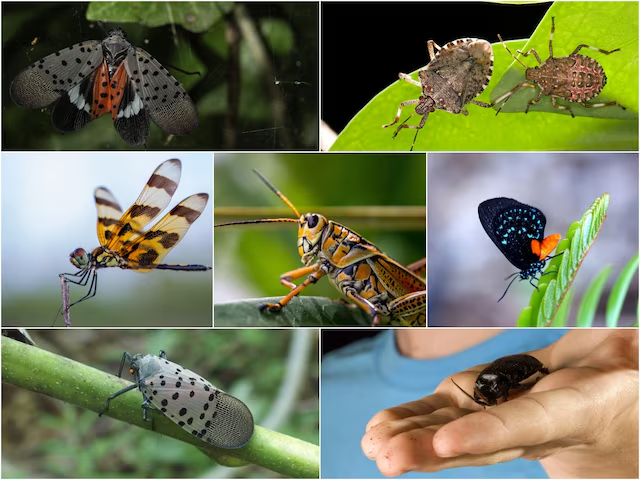
Insects are disappearing from the face of the Earth! 72% of the population is wiped out, impacting even remote areas; biodiversity is under threat.
Insect Population Decline: A 20-year study has revealed that the flying insect population has declined by 72%. This poses a threat to biodiversity and human life.
The tiny insects that sustain life on Earth are disappearing at an alarming rate. Recent research has revealed that their numbers are rapidly declining even in mountainous areas far from human presence. A team from the University of North Carolina, USA, monitored insect populations in the highlands of Colorado from 2004 to 2024. This area is virtually untouched by agriculture, pollution, or urban expansion. According to a study published in the journal Ecology, the results were shocking. Flying insect populations declined by 72% over 20 years, with an average decline of 6.6% per year.
Why are insects important for the earth?
Insects aren’t just annoying creatures. They’re the backbone of Earth’s ecosystems. They pollinate, which keeps crops and plants alive. They accelerate nutrient cycling and decomposition. Insects also provide food for birds, fish, and other creatures. This means that if insects disappear, the entire food chain will be at risk.The most significant finding of this research was that there was no direct human pressure on the insects. Despite this, their numbers declined rapidly. The reason turned out to be rising temperatures. The increasing heat of summer affected their life cycle and reproduction. This proves that climate change is no longer sparing even remote areas. This study echoes the insect crisis reported in North America and Europe, except that for the first time, it has been shown that this situation is also occurring in areas far from human settlements. This means that the problem is no longer limited to urbanization or pollution. It is a direct effect of global warming.